
First, look back to see what I have written on this topic before - and get a feel for the rhythm of the the thinking process.
Teaching Without Workbooks - Getting Started
http://eaglenestmom.blogspot.com/2012/04/teaching-without-workbooks-getting.html
Teaching Without Workbooks - Preschool and Kindergarten
http://eaglenestmom.blogspot.com/2012/06/teaching-without-workbooks-preschool.html
Now as a child reaches 1st grade, you need to do a little more "thinking ahead" and "purposeful" learning. Of course this can still be fun and feel like games, it just means you need to plan ahead a little bit more, to make sure learning happens on a deeper level, and that you are constantly stimulating your child's imagination and creativity. In other words, you want to create an "on purpose" learning environment.
Teaching without an official workbook curriculum, or text books, does not mean that you will be able to teach for Free ... you will probably want to invest in a few books and tools that you can refer to for ideas and instructions to keep you on the right track. What it does mean, is that your child will not be sitting down all day with paper and pencil.
Bible - For us, this is a most important start to our day. We use Polished Cornerstones and will begin using Plants Grown Up soon. And we use Instructions in Righteousness. These are from Doorposts. We purchased them once - and we pick and choose memory work and activities.
In the past, we have heavily used AWANA for our Bible curriculum, along with a daily Bible Story or sermon from the internet.
This should, though it depends on your priorities and your child, include prayers, Bible Reading, Bible memory, and Character Building.
There is a seemingly endless list of free resources online to assist you in teaching Bible to a child. Including catechisms, sermons, children's websites, Bible stories, and coloring and puzzle sheets, as well as crafts and puppets and many other activities. There are even more activities available in a Bible Books store.
English - While this subject can be mostly ignored until Jr. High. It is still important that a child gain an ear for grammar early in life. There are many grammar games, songs, and worksheets that are available online with a basic google or swagbucks search. Scholar has a fairly good understanding of the basic parts of speech and punctuation rules, just by listening to me discuss them with his older sisters and the songs they sing to help them remember things. All in one grade computer games usually cover the basics as well. Scholar is currently working through several 1st and 2nd grade Reader Rabbit and Jumpstart games that were on the shelf, left over from Story and Song and the pre-internet days.
Spelling games exist for computers, but there are also many spelling board games and card games - like Scrabble, Boggle, Bananagrams, and others of this sort.
Reading and Literature, read high quality literature - or use Librivox or the public library to find Books on Tape. I have found it highly effective to give my children the book in hand to read along with the book that they are listening to. McGuffy readers are available for free online - but there are many Reader sets to choose from as well.
Phonics is one area that I would suggest purchasing some kind of basic curriculum. Some children will pick it up without a curriculum, or from watching LeapFrog or Reader Rabbit. My mom loved Spaulding, but I have seen kids learn to read with every method available. Some programs are better for right brained or left brained children, and some focus with auditory, visual, or kinetic. Many children will pick up reading with very little effort by the time they are 9 years old. If one method seems to not work, try another one. Find some friends and see if you can borrow their curriculum. I may tackle this subject later.
Math - This subject often causes great fear and trembling. But it really isn't as hard as it appears. Think about the basics - Time, Measurement, Comparisons, Patterns, and basic arithmetic. Much of math can be learned in the kitchen, playing games, and building projects. Use real coins to play store. Even if this is all you do for the first 5 years, a 6th grader will be well equipped to put these ideas to paper and begin a more formal dedication to mathematics. As long as you are doing applied math, they will be picking up on the basics - so cook, play games, string beads, follow a pattern, follow instructions, build a birdhouse, and talk about the numbers and amounts, while you are having fun. If your child seems to need more, there are plenty of short workbooks available, games online, and Kahn's Academy.
History - This can be a ton of fun - or drudgery. First, find a good timeline (or make one) that you think will be a good fit for you. Some put a timeline around their schoolroom, others use a book, and others use online tools. Whenever you read about or learn about an event or person - place them on your timeline. I have found this to be quite fascinating myself.
Next, find a good color maps book. Dover has many wonderful books. In general, I would start with the USA. Pick up books at the library, read about states, learn about land marks, and have fun working through the books. Involve your friends and relatives, asking for post cards or special "state" gifts as they study each state. Scholar especially loved his package from Idaho, which included several snacks and meals that were produced locally, as well as some rocks, a hat, and a handful of post cards.
If you have room - get a wall sized map of the USA, and one of the whole world. Each time you study a person or event, mark your timeline, and find that location on the map.
Finally, find a good reading program. I suggest All Through the Ages. This will suggest quality books sorted by grade and subject, making it very easy for a parent to look up books at your library or online. History lends itself well to unit studies, notebooking, and lapbooking.
Science - Science is really not much harder than History, and can be incorporated together. Such as, learning about the telescope and astronomy, can also prompt a study of Galileo and other men important to this field. The public library will be a great asset to your adventure in learning.
We plan to use Magic School Bus tapes and books this year. Scholar will choose a book, and we will do experiments related to that topic, as well as extra reading and videos from Youtube.
Find books about Science Experiments - like Experiments That You Can Eat.
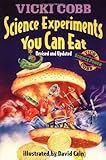
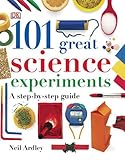
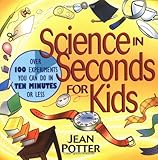
Take nature walks, identify strange bugs or plants, draw them in a nature journal.
Watch Science videos from the library or online.
That leaves subjects like PE, Music, and Art.
For PE - run and play outside, go to parks, take walks (nature walks can double as PE), join a running club or baseball or other sport. Just playing outside is fine.
Music is easy too. Borrow the idea of hymn study from Charlotte Mason. Study each of the great composers and their music. Make instruments from recycled things. Sing and dance and have fun. If you feel you have a child who wants or needs more, try violin or piano lessons.
Art can teach a child to notice details. Charlotte Mason suggests studying all of the works of a great artist during a month or two. Their are whole blogs dedicated to Charlotte Mason style learning of art and music. But even if all you do is create science experiments (color, texture, bake cookies) and make musical instruments, the child will be using their creative mind.
The wonderful thing about this more hands off style of learning, is that your child should have time to direct the study to learn things that interest him or her.
One little guy I read about was creating complicated deserts in the kitchen from scratch without any help ... before he was 7 years old. Hardly a day went by without him pouring over a cook book to try something new.
Another little girl liked to build things with the wood scraps that her dad brought home. She has created all kinds of doll houses and bird houses, uses real tools, paints, and does all of the cutting, drilling, hammering - by herself. She was 8 when I tripped on her website that her mom set up - to sell what her daughter was making for fun.
And a set of sisters, ages 8 and 10, that I knew a few years ago, set up a dolly clothing business. Sewing and eventually designing their own clothes for American Girl and baby dolls.
And the one thing that they had in common - was a low key learning environment, filled with activities and opportunities and a parent willing to let the child learn and experiment.


